Fertility rate is declining globally. South Korea holds the lowest global ranking, with less than one child per mother; Italy & Spain’s low fertility links to economic pressure, and Singapore blames its decreasing trend to the cost of living and the changing attitudes toward pregnancy.
As the world gets more uncertain, people fear the future, leading to indecision about having children. Climate change is one of the factors impacting this uncertainty. “I cannot see myself as responsible for the life of another human being, for generating a new life that would become another burden to a planet that is so overloaded already,” a BBC interviewee says.
While studies link natural disasters to fertility fluctuations, and users online show growing interest in fostering and adoption over pregnancy, one region proves that the association between child desire goes beyond the amount and intensity of natural disasters.
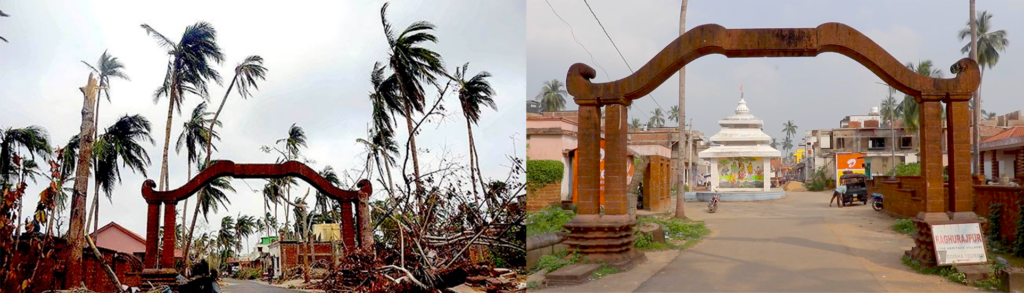
Odisha Through Natural Disasters: 2019 Cyclone Fani
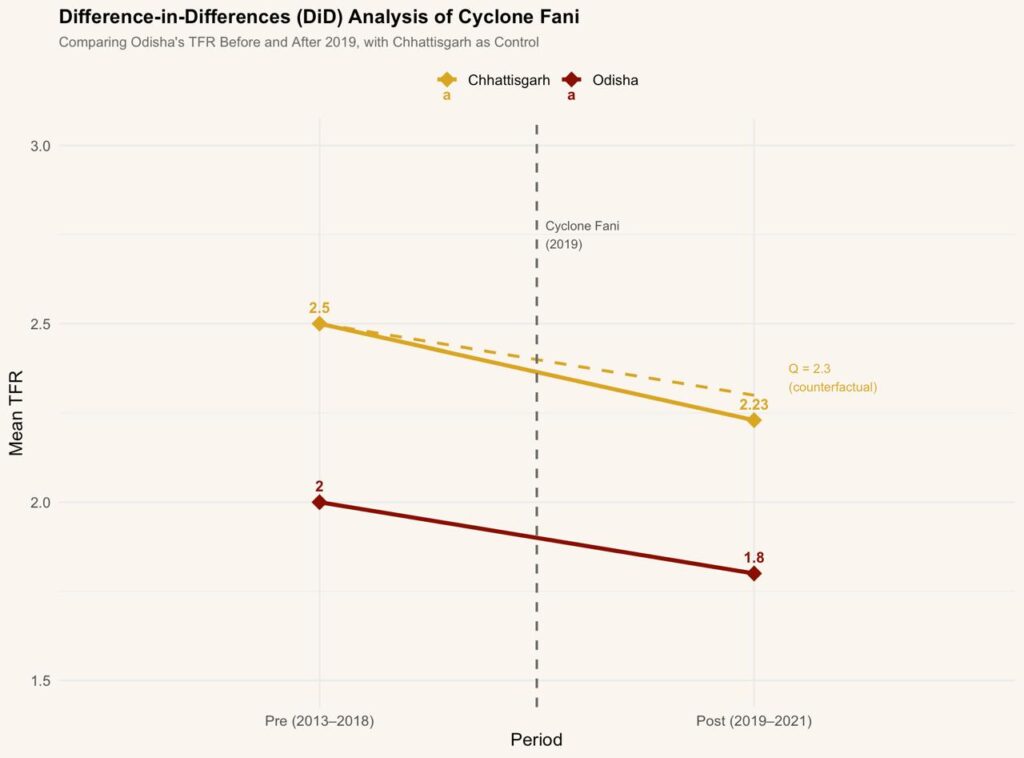
Amid a global fertility decline, India’s eastern coastal state of Odisha stands out as a model of resilience to natural disasters. Despite yearly cyclones, Odisha maintained remarkable fertility stability. Its Total Fertility Rate has been declining, like the rest of India. But here is what is striking: it declined at almost the same pace before and after Cyclone Fani. No crash nor spike. The storm left no measurable fingerprint on the state’s demographic trajectory.
Natural disasters carry mental costs beyond physical destruction: studies link climate shocks to PTSD, eco-anxiety, and fertility variations – including the ‘Replacement Effect,’ where, following the death of a child, another child is born to replace the one who was lost. Despite these complex dynamics, Odisha defies this pattern. This consistency was tested in May 2019 when Cyclone Fani struck with 175 km/h winds, devastating the state’s cities Puri and Bhubaneswar. Tracking and evacuating 1.2 million people turned a potential massacre into a story of survival.
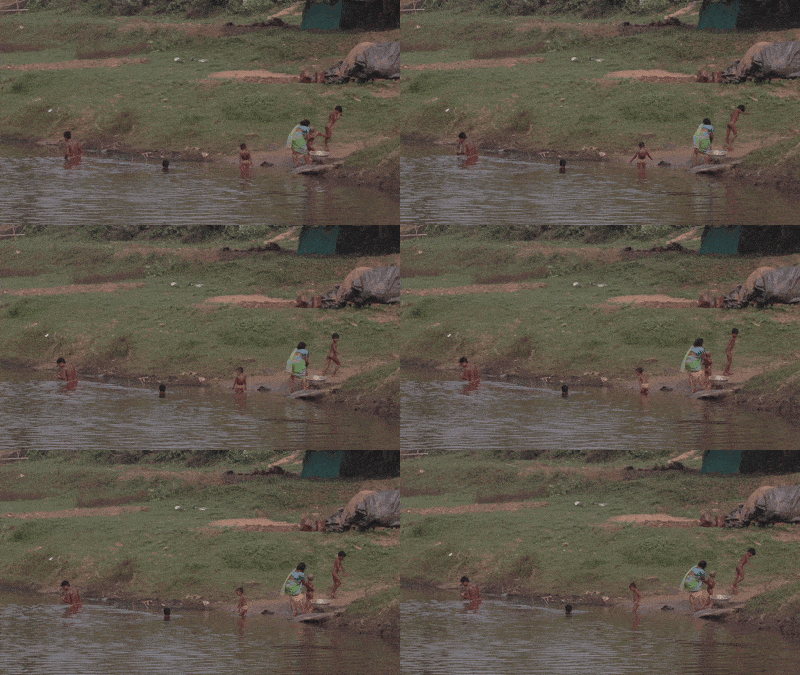
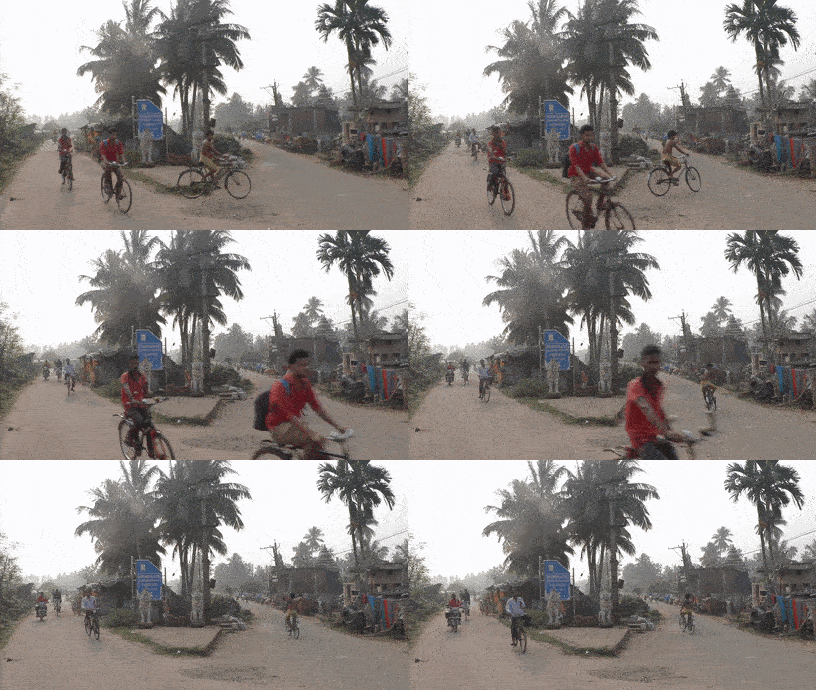
And contrary to expectations, after the cyclone local communities were alive. Families building, children running: positivity wasn’t forced – it was structural, woven into the way people lived together.
How do people react to natural disasters?
What data shows isn’t causal. 28-year-old Omsat Mohanty from Bargarh, Western Odisha, believes confidence in the future stems from prompt reactions and community support. Moreover, he believes that prevention campaigns combined with immediate response, local support, and policy help governments contain distress.
Om notes that living through a cyclone isn’t the only frightening part. Anxiety often sets in afterward, during the days of uncertainty when lines are cut and contact is lost. “This is the hardest time,” he says. “Thinking of friends and family in cyclone zones during blackouts scares me. It can take days until they are answering messages again.”
It is precisely this window of uncertainty that Odisha’s strategy targets. Importantly, solutions go beyond technology: they rely on psychological reassurance. Om explains that this confidence stems from the state’s ability to prevent infrastructure collapse. “The government guarantees an emergency line that’s accessible and reliable, and they also send emergency alerts,” Om says. The media also plays a key role: “It creates awareness, not panic: public broadcasting tends to be regulated, unlike social media.”
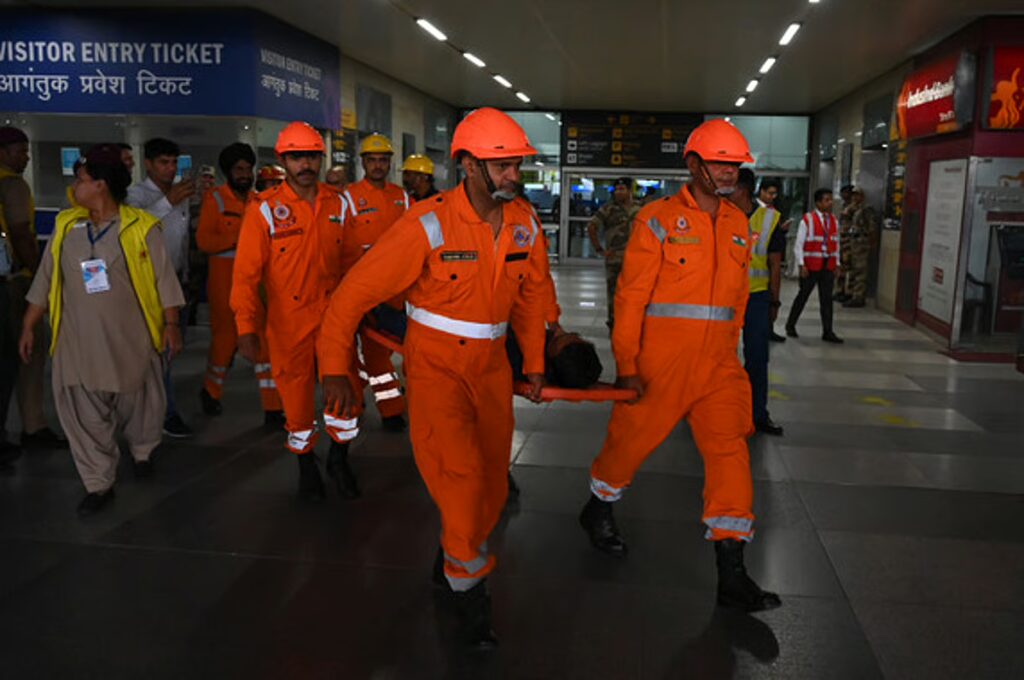
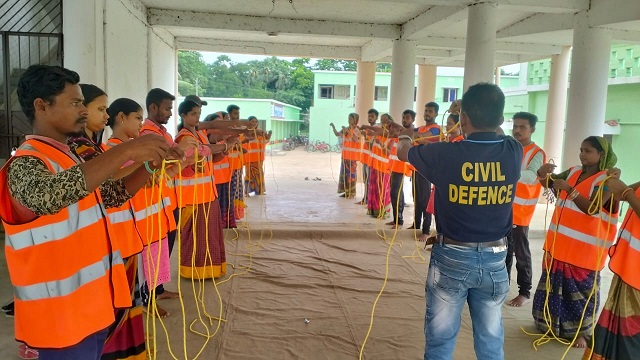
Survival also relies on community: “Humans are nothing in front of that, so we better come together and face it as a community and help each other,” Om says. According to World Bank, every year over 100,000 volunteers undergo weeks of training to respond quickly, and are ready to help whoever needs it. This collective readiness gives residents confidence: “Locals know that it’s only a matter of days: in a week everything is back to normal.”
Prevention reduces damage
Modern technology has significantly improved Odisha’s ability to forecast cyclones, floods, and other hazards. Yet, according to Teja Malladi, CEO of Mapsolve AI and a 15-year veteran in disaster risk, preparedness remains far more critical than prediction alone.
“Predictions must inform preparedness,” Malladi says. “If we aren’t ready to respond, even the best forecasts are useless.” Malladi also stresses that predictions should not be treated as an end in themselves but as tools to inform and strengthen response strategies, such as early warning systems, evacuation planning, and public awareness.
Beyond physical safety, the state has mastered economic stability during crises, with the Odisha government offering a dedicated toll-free number to denounce complaints against traders charging high prices and prevent money gouging. “Prices are strictly controlled to guarantee access to food, water, and essential supplies,” Om affirms.
India allocated Rs. 1,60,153 crores for the 2021-2026 period through the State Disaster Response Fund (SDRF) and State Disaster Mitigation Fund (SDMF). Odisha’s disaster management have successfully reduced the loss of human life during disasters, leading residents to be more prone to continue new life in the region. “I see a future for myself here,” Om affirms. “Knowing the community is ready to act turns fear into hope, and makes you realise that the cyclone’s impact is only temporary.”
According to expert Malladi, Odisha’s successful approach to natural disasters can be an example to other areas in danger while the world finds its way to stop climate change. First, invest in resilient infrastructure. Disaster management should expand beyond immediate response to include long-term recovery and economic support. Moreover, communities should be empowered through education, awareness, and opportunities to diversify their incomes. Finally, he argues that policies must integrate disaster risk reduction into broader development planning, ensuring that settlements are not built in high-risk areas like floodplains.
Odisha proves that while we cannot stop the climate crisis yet, we can master our response to it. Here, data does not show a population retreating from the future: it shows a population moving through disaster at the same steady pace as before, neither accelerating nor stopping. When a region moves from reactive panic to proactive anticipation, it changes the very psychology of its people: “I wouldn’t be scared to start a family,” Om continues. “I think what’s important is not only what happens to a community, but how the community reacts.” Residents like Om now look to the future with hope, knowing their community is ready.